
Massage for stress and sleep: why length matters more than pressure
When the body is tired but will not switch off, a firm hour is the wrong prescription. Here is what a massage can and cannot do for stress and sleep, and how to book it so it works.
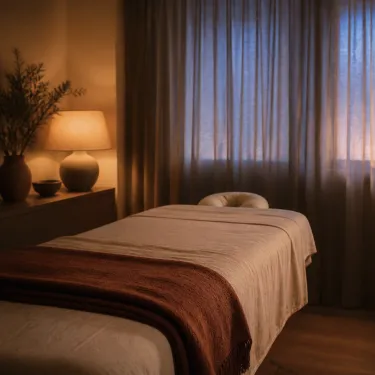
Massage for stress and sleep is the one reason people book that they are slightly embarrassed to say out loud. There is no injury to report and nothing to point at — just a body that is tired all the time and a head that will not switch off at eleven at night. It is a completely legitimate reason to be on a table, and it is the case where booking the wrong session is easiest, because the instinct that serves everyone well for pain — go firmer — is exactly the wrong instinct here.
The wrong dial
There are two dials on a massage: how firm, and how long. For a specific painful spot, firmness is the one that matters. For a nervous system that has been running hot for a month, it is length — and turning up the pressure instead actively works against you, because deep work asks the body to brace, and bracing is the state you came in to leave.
This is why the 90-minute session exists and why it is not simply “more massage”. The extra half hour is spent going slower rather than doing more: longer strokes, longer pauses, and enough repetition on one area for it to actually stop guarding. Hands, feet and scalp get attention that an hour never reaches, and the close is deliberately unhurried so you come back up slowly instead of being tipped off the table at the end.
The 90-min Swedish Massage is $180, and it is the default recommendation for this problem for a plain reason: when the body is tired but will not switch off, the length of the session matters more than the pressure. What Swedish massage is covers the technique itself.
What a massage can and cannot do here
It is worth being precise, because this is an area where a lot gets claimed.
What happens on the table is straightforward: an hour or more of slow, predictable, rhythmic contact in a warm quiet room, with nothing to decide and nowhere to be. Most people come off the table calmer than they got on, many fall asleep during it, and a good number sleep unusually well that night. That is a real and worthwhile effect.
What it is not is a treatment for insomnia, anxiety or depression. A massage does not cure a sleep disorder, it does not replace anything a doctor has prescribed, and anybody who tells you otherwise is selling. If your sleep has been genuinely broken for months, or if the stress you are carrying is closer to a clinical description than a busy patch, please take that to a doctor — and book the massage as well, if you like. The two are not in competition.
There is a second reason length wins here, and it is about how long it takes to stop performing. Most people spend the first fifteen or twenty minutes of any massage still slightly on duty — adjusting position helpfully, wondering whether to make conversation, mentally working through tomorrow. In a sixty-minute session that is a third of the appointment gone before anything settles. In a ninety-minute one it is a warm-up.
Which session, if not the 90-minute Swedish
Aromatherapy, when the room matters. Swedish-depth work with essential oils chosen for the session — for some people the scent is what turns the hour into an occasion rather than an appointment, and that turns out to matter more than the technique. The 60-min Aromatherapy Massage is $140; what aromatherapy massage involves explains how the oils are chosen and what they are not.
Lymphatic drainage, if firm pressure makes you tense. The technique is very light, repetitive skin-stretching rather than pressure, and the rhythm is deliberately meditative — most people find it the least intense and the most sedating hour on the menu, and falling asleep is normal rather than remarkable. The 60-min Lymphatic Drainage Massage is $130, and the full explanation is here.
Feet, if your head is the problem. This sounds like a non-sequitur and is not: an hour of firm, systematic work on the feet is a very effective way of moving your attention out of your head and into your body, which is the trick most relaxation advice is trying and failing to teach. The 60-min Foot Massage & Reflexology is $120 and you stay fully clothed — see what reflexology actually is for what is claimed for it and what is not.
What to say when you book
“I am stressed” is a fine thing to say and it is worth saying a little more, because the session is built differently depending on the answer.
Tell me whether you want to be talked to or left in silence — both are normal, and guessing wrong wastes half an hour. Say if you would rather not have your face, scalp or stomach touched. Say if you tense up under firm pressure, because the whole plan changes for a body that braces. And say if the aim is specifically sleep, because that argues for a later appointment, a slower pace and a longer, quieter finish rather than an efficient one.
None of that is fussy. It is the difference between an hour that works on you and an hour that works for you.
Book it at the end of the day
This is the single most useful piece of scheduling advice on this page, and almost nobody follows it.
Ninety minutes of oil massage tends to close a day rather than interrupt it. Booked at two in the afternoon, you spend the following three hours slightly dreamy at a desk, then re-tighten on the drive home. Booked late, you go straight home, eat something, and go to bed while the effect is still on you — which is when a massage is most likely to turn into a good night's sleep rather than a pleasant hour.
The studio is open until 9:30 pm daily, which makes a 6:00 or 7:00 pm start entirely practical on a weekday.
Two things to do the same evening
Neither is exotic and both make a measurable difference to whether the session sticks.
Nothing bright afterwards. An hour of screens undoes a good part of the settling. If you can go from the table to a shower to bed, do.
No performance goals. Do not go to the gym at 8pm to make the most of feeling loose. The point of the evening is the opposite of that.
Why the body will not switch off by itself
The pattern is familiar enough to be worth naming, because recognising it is what tells you which session to book.
Stress does not stay in your head. It shows up as a jaw that is clenched by mid-morning, shoulders that sit an inch higher than they used to, breathing that has moved up into the chest, and a low-grade ache across the upper back by Thursday. None of that is an injury — there is nothing to point at — and all of it is a body that has been braced for weeks and has forgotten how to stop.
A brace does not release because you decide it should. It releases when something else is more convincing: warmth, slow predictable contact, an hour where nothing is required of you. That is the whole mechanism, and it is why the pace of the session matters more than the pressure. A therapist working hard on a braced body mostly produces a braced body that is also sore.
It is also why the neck and shoulders are usually where a stress session starts, even when nothing there hurts specifically — that band is where the pattern lives, and the desk-work version of it is the same shape with a different cause.
If firm pressure makes you tense up
Some people find deep work relaxing and some brace against it, and that is a preference rather than a weakness. If you are the second kind, say so at the start — and consider the two treatments that are gentle by design rather than by request: lymphatic drainage, which is skin-stretching rather than pressure, and aromatherapy at Swedish depth.
The mistake worth avoiding is booking deep tissue for a stress problem because it sounds more serious. Depth is a tool for a specific complaint. When the complaint is your whole week, it is the wrong tool used on the wrong thing.
How often is worth it
For stress specifically, regular beats occasional by a distance. A single 90-minute session in a bad month is a nice evening; the same session monthly is a rhythm your body starts to anticipate, and the anticipation is part of the effect.
Monthly is a sensible default. Every two weeks through a genuinely brutal stretch — a deadline quarter, a house move, a new baby — and then back to monthly, is a better pattern than promising yourself weekly and stopping after three.
An evening that actually works
A 90-minute session followed by two hours of email is a 90-minute session mostly wasted. What follows it is not a nice extra — it is the difference between a pleasant hour and a night of proper sleep.
Go straight home. No errand, no supermarket, no second stop. The drive is already spending some of it.
Eat something light. A heavy meal ends the settled feeling fairly abruptly, and so does eating nothing at all.
A warm shower, then dim light. The drop in body temperature after a warm shower is itself a sleep signal, and it is free.
Screens down early. An hour of bright light and scrolling undoes a good part of the settling. If the massage was booked because you cannot switch off, this is the part of the evening that most deserves protecting.
Bed earlier than usual. Not at your normal time. The window where you are genuinely sleepy after a long session closes, and if you sit through it you can end up more awake at midnight than you were at eight.
When it is pain keeping you awake
A different problem wearing the same clothes, and it wants a different session.
If what wakes you is a shoulder you cannot lie on, a lower back that objects when you turn over, or a neck that is stiff every morning, then the sleep problem is downstream of a physical one and a long relaxing massage treats the wrong end of it. Targeted work on the area comes first — then the sleep usually follows on its own.
Two things worth checking alongside it: your pillow, if the complaint is your neck, and your mattress if you wake stiff in the lower back most mornings. Eight hours a night in a bad position beats any monthly appointment, and no amount of massage argues with it successfully. What to do between massages covers the sleeping positions worth trying.
If it is your first one
Booking a 90-minute session as your first massage is entirely reasonable, and for this problem it is the right call. What happens at a first massage covers the ordinary parts nobody explains — undressing, draping, whether you have to talk — and if you are still weighing the treatments against each other, choosing between them takes a minute.
Tell me when you book that sleep is the reason. It changes the pace of the session, not the price — get in touch and book a time late enough that you can go straight home afterwards.