
Shoulder pain from a computer mouse: why it is always one side
Four years of holding one arm slightly out to the side produces a genuinely asymmetric body. Why symmetrical advice disappoints, and the six changes that actually unload the shoulder.
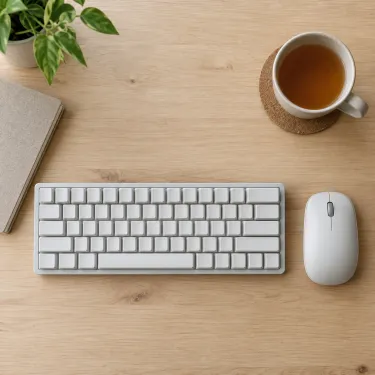
Shoulder pain from a computer mouse is one of the most lopsided complaints a massage therapist sees: one shoulder, one side of the neck, sometimes one forearm, and almost always the side you click with. People arrive convinced they slept badly. They did not. They have spent four years holding one arm slightly away from their body for eight hours a day.
The posture nobody notices they are in
Put your hand on a mouse and look at what the rest of the arm is doing. The elbow is usually a few inches out from the ribs. The shoulder is fractionally lifted and fractionally forward. The forearm is rotated so the palm faces down. The wrist is slightly extended. And the hand is making a small, repeated movement thousands of times a day.
None of that is heavy. That is exactly the problem. A muscle holding a light load continuously is under far more total work than a muscle doing something hard for a minute, and the muscles that hold an arm out sideways — the upper trapezius, the levator scapulae at the corner of the neck, the small rotator muscles at the back of the shoulder blade — are not built for a full shift of it.
So they stay short. Then they get tender. Then the tenderness starts referring: a dull ache at the corner of the neck, a hot spot under the shoulder blade, sometimes a headache on the same side.
Why it is always the same side
Because the other arm rests. The keyboard hand is supported by the desk and moves symmetrically; the mouse hand is unsupported and works alone. Over a few years that produces a genuinely asymmetric body: one shoulder higher, one side of the upper back tighter, and a right-hand side that feels a full grade tighter than the left under a therapist's hands.
It is also why the usual advice — sit up straight, do some stretches — disappoints. Symmetrical advice does not fix an asymmetric load.
The six changes that actually reduce it
Bring the mouse in. The single biggest one. If your mouse is on the far side of a number pad, your elbow is out by four inches all day. A compact keyboard without a number pad moves the mouse several inches closer to your midline, and the shoulder stops holding the arm out.
Support the forearm. If the arm hangs off the front edge of the desk, the shoulder is holding its weight. Sitting close enough that the forearm rests on the desk offloads it entirely.
Lower the armrest or remove it. An armrest set too high pushes the shoulder up toward the ear all day, which is the position you are trying to get out of.
Move the mouse with the whole arm occasionally. Tiny wrist-only movements keep the same few fibres working. Larger movements spread the load.
Switch hands for a week. Clumsy for two days, then surprisingly workable, and it is the only intervention that genuinely rests the loaded side.
Interrupt it. Stand, drop the arms, roll the shoulders back and down, sixty seconds, every half hour. Frequency beats duration for this pattern every time.
What to do about the tender spots
There are usually two or three, in the same places: the top of the shoulder, the inside edge of the shoulder blade, and the corner where the neck meets the shoulder. They feel like lumps and they are tender to press. What a muscle knot actually is explains why they keep returning — and why reaching behind your own shoulder blade to press one is structurally doomed, since you have to contract the muscle you are trying to release.
For the same reason, most self-treatment gets about twenty minutes of relief. Sustained pressure held on warm tissue while the muscle relaxes underneath is a different thing entirely from a hard four-second jab with a thumb.
When it is not just the mouse
Worth saying plainly. Muscular tension from a mouse is dull, local, worse late in the day and better at weekends. If instead you have numbness, pins and needles or weakness in the hand, pain that wakes you at night, or a grip that has noticeably weakened, that is a different question and it belongs with a doctor. Massage relieves tight muscle and eases the ache around it. It is not medical care, and it should not be used to keep working through something that needs looking at.
The session that suits this
This complaint is unusually well matched to a short treatment, because the whole problem lives above the waist. The 30-min Neck, Shoulder & Back Massage at $75 spends all thirty minutes on the upper back, the band across the shoulders and the base of the neck, with no time going to legs or feet. That narrowness is the point, and it fits inside a lunch break.
If one side has been stubborn for months rather than weeks, an hour of concentrated work is the better buy. Deep tissue massage uses a high-grip cream rather than a gliding oil, precisely so the pressure can stay on one spot and work it instead of sliding past — and you can point at the spot in the first two minutes.
Either way, say which side. It is the most useful sentence in the consultation, and the one people most often leave out because it feels too obvious to mention.
The bigger pattern
A mouse shoulder rarely arrives alone. It usually comes with the forward head that gets called tech neck, a rounded upper back and hips that have shortened from sitting, because all four are the same eight hours seen from different angles. Massage for desk workers maps the whole thing, and it is the better starting point if more than one area is complaining.
When the right shoulder has been the loud one for long enough, book a session and lead with which hand holds the mouse. It tells a therapist more about your shoulder than any amount of palpation.