
How hot are hot stones in a massage, really?
Warm enough that you notice immediately, never hot enough to flinch. How the temperature is managed, why the first touch is brief, and the one thing that makes it unsafe.
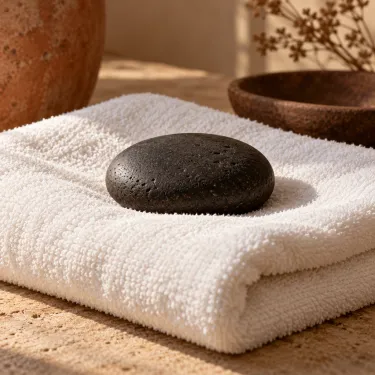
How hot are hot stones in massage is a fair question to ask before lying face down while somebody puts one on your spine. The short answer: distinctly warm, the way a mug of tea you can comfortably hold is warm. Not scalding, not mild. Warm enough that the first contact makes you exhale, and well below anything that could mark skin. The longer answer is about how that temperature is kept in range, because the system matters more than the number.
How the temperature is managed
Four things, and together they are why burns from a competently run session are essentially unheard of.
The stones are basalt. Smooth volcanic rock, chosen because it holds heat evenly and gives it up slowly. No hot spots, no sharp edges.
They are heated in water, not on a surface. Water cannot exceed its boiling point, and the stones sit well below that. A stone heated on a hotplate or in a microwave has no such ceiling, which is why neither is used.
Every stone is tested on the therapist first. Inner forearm, every time, before it touches you.
The first contact is deliberately brief. The stone is laid flat for a second or two, lifted, then returned. That pause is you being asked a question without words.
What it feels like in order
First second: clearly hot, a little startling, and the most intense moment of the whole contact.
Next few seconds: the sensation spreads and softens as the heat moves into tissue rather than sitting on skin.
After that: pleasant warmth with weight behind it, and most people stop registering the stone as a separate object at all.
If the first second does not settle into the second stage, that stone is too hot for you today. Say so — the right phrasing and why it is never awkward is covered in how to tell your therapist the pressure is too much.
Why stones keep getting swapped
Basalt gives up heat steadily, and a stone that has been working for a few minutes is no longer doing the job. You will hear the quiet sound of one going back and another coming out several times an hour. That rotation is the session working properly, not an interruption.
It also explains a common complaint about cheaper versions of this treatment elsewhere: a session with too few stones runs out of heat halfway through and becomes an ordinary oil massage with a warm start.
The thing that actually makes heat unsafe
It is not the temperature. It is not being able to feel it.
The whole safety system above depends on you noticing and saying something. Anything that dulls that signal removes the protection:
Reduced sensation in the skin, from nerve-related conditions, diabetes or anything else that affects feeling in the hands, feet or back.
Numbing creams or strong pain medication taken before the session.
Alcohol beforehand. A bad idea before any massage, and a worse one before a warm one.
Falling deeply asleep. Dozing is fine and normal. Being unrousable is not, which is part of why stones are moved rather than left.
Tell your therapist about any of those before you book, alongside everything else in what your massage therapist needs to know.
Why a cold stone sometimes appears
It surprises people, and it is deliberate rather than a mistake.
A chilled stone used briefly on an area that has just had sustained heat gives a sharp contrast many people find clarifying, particularly on the face, the temples, or somewhere that feels hot and irritated rather than tight.
It is not part of every session, and it is never a surprise if the therapist is doing their job properly: you will be told before it arrives. If you would rather skip it, say so, and nothing is lost.
The same courtesy applies in reverse. If you want more heat than you are getting, that is a normal request and far more common than people expect.
Two questions people ask afterwards
"Why was I pink?" Warmth brings blood toward the surface. Mild, even redness that fades within the hour is the expected response, and it is a different thing from the circular marks in what cupping massage is.
"Why am I so thirsty?" Two hours of sustained warmth will do that. Drink water afterwards — not because anything is being flushed out of you, but because you have been warm for a long time.
What makes a stone the right tool
Not every smooth rock will do, and the reasons are practical.
Basalt holds heat. It is dense volcanic rock, so it carries warmth for minutes rather than seconds and gives it up evenly rather than all at once.
It has no edges. Shaped and polished so that pressure spreads across a broad face. An edge would concentrate force in one line.
The sizes vary for a reason. Large flat ones for the back, small ones for between the toes or in the palms, long narrow ones for either side of the spine.
They are cleaned between clients. Worth knowing and worth asking about anywhere you have not been before.
Where to try it
Hot stone is not a separate booking here. It is the second half of the 120-min Swedish Massage at $270, which starts with warmed organic oils and brings the stones in once the body is ready for them.
If you want the shape of the whole session before deciding, read what to expect from a hot stone massage first.
And the practical answer to the original question, the one worth remembering on the day: the right temperature is the one you can lie under without thinking about it. If you are thinking about it, say so. Check times and book.