
Fall training season: recovery for a peak block
The heat breaks, the long runs get long, and the race is eight weeks away. Where massage belongs in a peak block, and the four-day rule before race day.
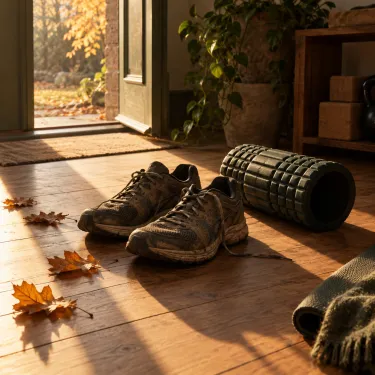
Fall marathon training recovery is the half of a training block that most runners plan last and need most. Autumn in Orange County is when mileage peaks: the heat finally breaks, the long runs get genuinely long, and the race that felt comfortably distant in July is now eight weeks away. The legs that carried a summer base are not the legs that will carry a peak block, and the difference is usually recovery rather than fitness.
What changes about your body in a peak block
Three things, and they arrive together.
Volume goes up faster than tissue adapts. Muscle strength responds to training within weeks. Tendons and the connective tissue around them take considerably longer. That gap is where most autumn niggles live.
Range of motion quietly shrinks. Every additional mile is more repetitions through the same partial range. Nothing is torn or damaged; the hips and hamstrings simply stop being asked for their full length and stop offering it.
Recovery time lengthens while the schedule does not. The same long run that needed a day in August needs two in October, and the plan on the fridge does not know that.
The autumn-specific problems
The temperature drop. Cooler mornings mean faster running, which is the point — but it also means tissue that is genuinely colder at the start of a run. The warm-up that was adequate in August is not adequate in November.
Darker starts. More running on uneven ground in poor light, which loads ankles and calves differently.
Back-to-back weekends. Peak blocks stack long runs, and the second one lands on legs that have not finished with the first.
The taper trap. Mileage falls, the body finally starts repairing properly, and everything aches at once. This is normal, it is badly timed, and it panics people every year.
Where to put massage in a training block
Timing matters more than technique here, and getting it wrong is how people conclude that massage does not suit them.
Build phase, every two to three weeks. This is where the work belongs. Regular, moderate sessions during the build do far more than one heroic treatment at the end.
Two or three days after a long run, not the same evening. Immediately afterwards the tissue is already irritated, and a firm session simply adds to it.
Not in the last three to four days before the race. A deep session can leave some people mildly achy for a day, and race week is the wrong week to find out you are one of them. If you want something in race week, keep it light and flowing, and keep it before Wednesday.
During the taper, aim at range rather than depth. Legs in a taper do not need to be worked over. They need to move freely.
Afterwards, wait a few days. Post-race legs are sore rather than tight, and delayed onset muscle soreness is better left to fade before firm pressure arrives.
What to have worked on
The same shortlist every autumn: calves and Achilles, the outside of the thigh and hip, hamstrings, hip flexors, and the soles of the feet. Massage for runners goes through each of them and why calves are the region most runners underestimate.
One addition specific to a peak block: the hip flexors of anyone who sits all day and runs in the evening. Those hips arrive at every run already short, and no amount of work on the back of the leg compensates for it.
The session most autumn runners should book
For a body that is tight rather than sore — which is most bodies in a build — the 60-min Stretching & Swedish Massage at $130 is the right shape. Rhythmic oil work first, because stretching a cold guarding muscle achieves very little, then held assisted stretches through hips, hamstrings, chest and shoulders. Runners are far more often short of range than short of pressure.
When one specific area has become the problem — a calf, one side of the hip, the outside of a knee — an hour of concentrated deep work aimed at that region is the better buy, and you should point at it in the first two minutes rather than hoping it gets found.
The full treatment list has the longer versions if you would rather do one thorough session every three weeks than two short ones.
What it does and does not do
It reliably reduces the feeling of tightness and improves how freely a joint moves. Most runners notice it most in the first mile of the next run — the legs stop needing three miles of warm-up.
It does not repair an injury, remove lactic acid, or make a training plan safe that was not. Massage eases and loosens; it is not medical care. Anything sharp, one-sided, worse with every run, or painful when you are not running belongs with a doctor or a physical therapist first, and taking it to a massage table instead is how a small autumn problem becomes a missed race.
The cheap things that matter as much
Warm up longer than you did in summer. Five easy minutes before you stretch, always. Sleep, which does more for a peak block than any treatment. And enough food, which is the one people quietly get wrong when mileage climbs.
How often the massage part should happen depends on your volume and on what else is in your week — how often you should get a massage sets out the four different answers, and the training one is not the same as the desk one.
Plan it now, not in week ten
The runners who get through an autumn block well are the ones who put the sessions in the calendar alongside the long runs, rather than booking one in a panic when something starts to hurt.
Sports recovery massage covers how it fits around a training week in more detail. When you know your race date, book a session and bring it with you — the date and your weekly mileage are the two facts that decide what the hour should be.